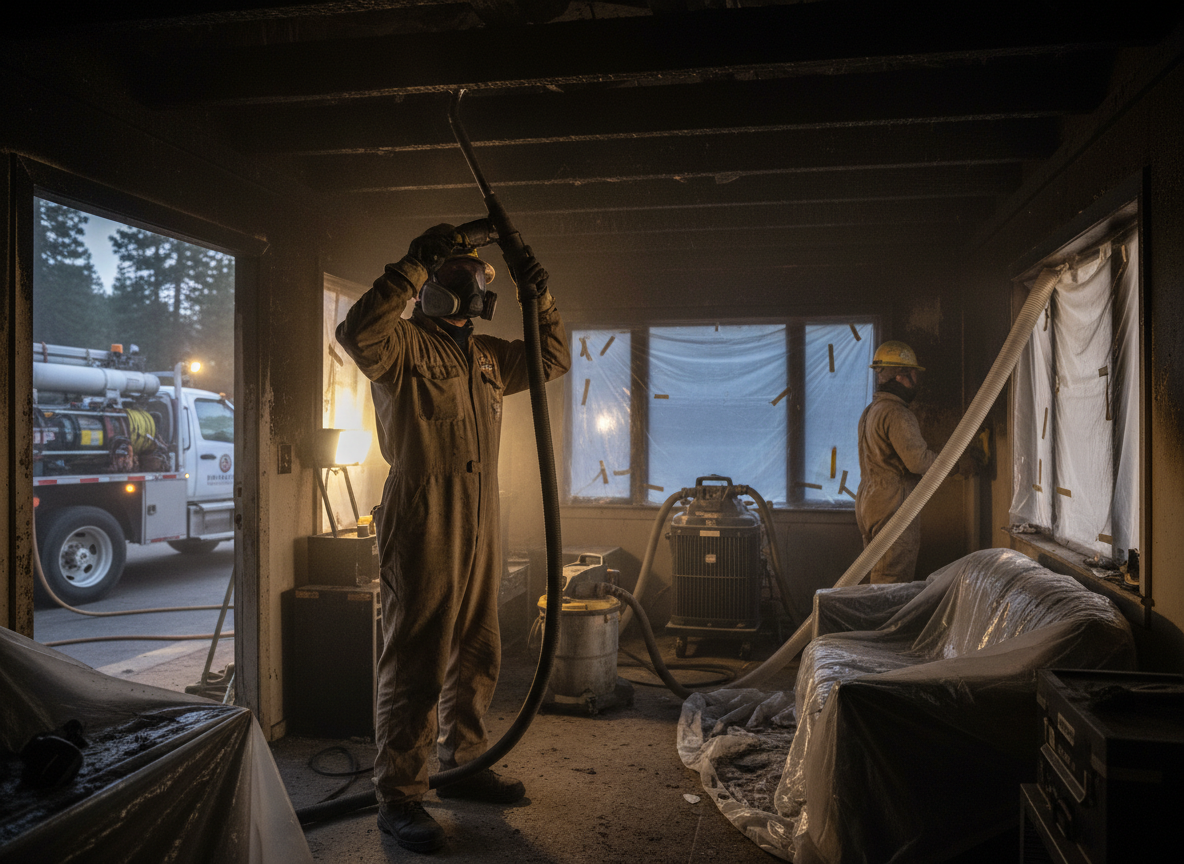
Fire damage restoration in San Bernardino often starts with crews driving down from our Rimforest location at 26491 Pine Ave. The mountain route means crews watch for snow on the 18 or 330 when winter storms hit, which can slow response to homes near downtown or the university. Older single-story houses common in San Bernardino neighborhoods hold smoke deeper in walls and attics, so we focus on full removal before any rebuild work begins.
San Bernardino's mix of 1950s-1970s housing stock and narrow lots changes how we stage equipment compared to Rimforest properties. We bring in extra containment because many blocks sit close to busy streets like E Street, and winter runoff from the mountains can push ash into basements or crawl spaces after a fire. Our 24/7 availability lets us start extraction the same day even when snow delays the drive from the mountains.
Homeowners in San Bernardino call us after fires that start in the San Bernardino National Forest and push smoke into the valley. We coordinate with local access points near the base of the mountains so equipment reaches properties without blocking residential streets. This approach keeps the job moving when heavy snow has already made some canyon roads slow.
Around San Bernardino
We regularly work near:
- 📍Perris Hill Park
- 📍San Bernardino High School
- 📍California State University San Bernardino
- 📍San Manuel Stadium
- 📍E Street
- 📍Glen Helen Regional Park
Fire Damage Restoration Rimforest in San Bernardino — Local Notes
- •Winter snowfall on the mountain roads from Rimforest can add hours to the drive into San Bernardino, so we stage extra drying equipment ahead of storm forecasts.
- •Many San Bernardino homes from the 1960s have original plaster and knob-and-tube wiring that traps soot, requiring slower, section-by-section cleaning.
- •Narrow lots near downtown mean we use smaller extraction units and work from the street when driveways are blocked by snow piles.
- •Runoff from mountain snowmelt after a fire often carries ash into San Bernardino crawl spaces, so we always check drainage patterns before sealing.