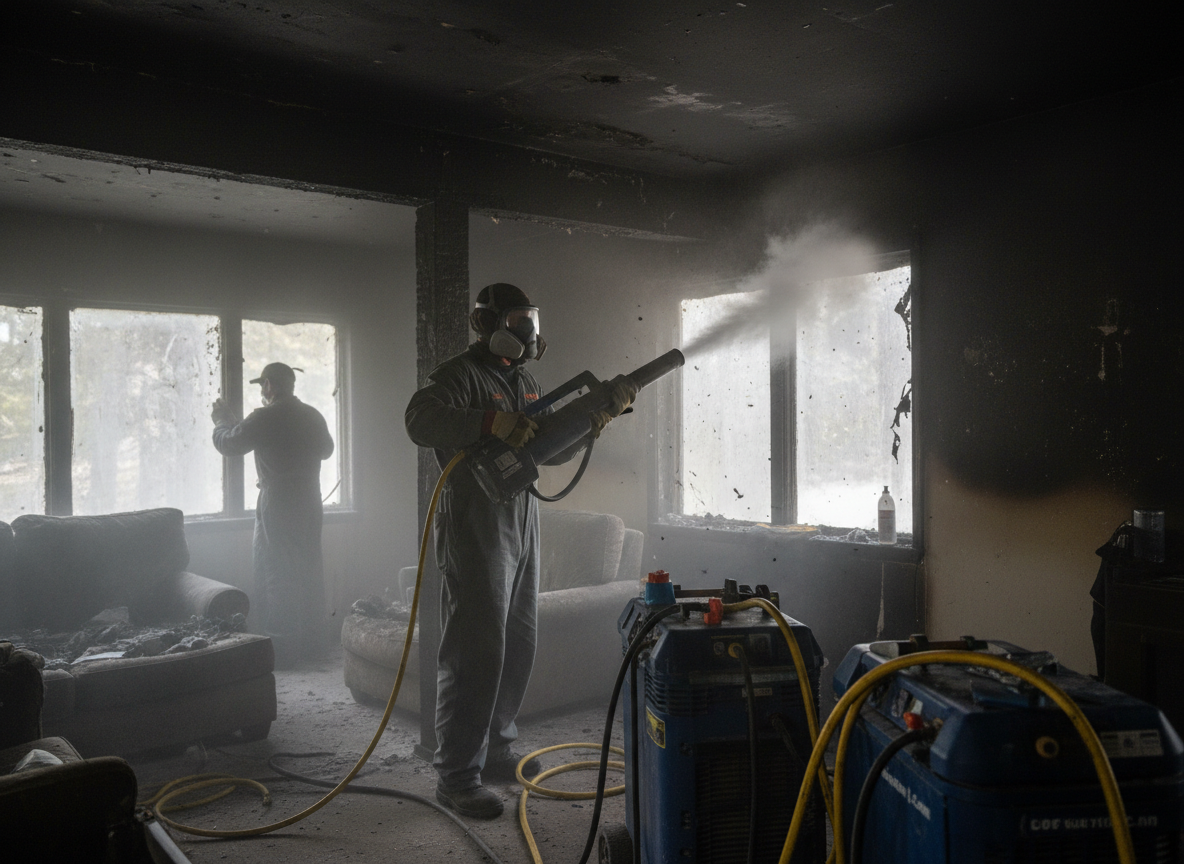
Rimforest sits in San Bernardino County at elevation where winter snowfall often blankets roofs for weeks. Older wood-frame cabins common throughout the area allow smoke to travel deep into wall cavities and attic spaces through unsealed joints and aged shiplap. Once temperatures drop, the cold air slows odor volatilization so residual smells linger longer than in lower-elevation homes near Lake Arrowhead. Technicians must account for frozen moisture in insulation that can re-release when spring thaws begin, requiring staged drying and repeated odor checks.
Smoke residue on cedar siding and shake roofs reacts differently with alkaline ash than on modern drywall. In forested pockets around Rimforest, wind-driven smoke from nearby fires frequently enters through ridge vents and gable ends that stay open during shoulder seasons. Full removal often means pulling baseboards and crown molding to reach hidden deposits before ozone or thermal fogging can be effective. Homeowners who attempt DIY cleaning with standard detergents usually push particles deeper into porous redwood timbers, complicating later professional extraction.
San Bernardino County building practices in the 1960s and 1970s left many Rimforest structures with single-pane windows and minimal vapor barriers. After a fire, pressure differentials from winter storms can force smoke through these gaps into living spaces. Restoration crews therefore start with negative-air containment on the leeward side of the structure to prevent cross-contamination into unaffected rooms when snow loads shift on the roof.
Technician insight
In Rimforest, the thing that catches most people out with smoke damage restoration is how heavy winter snow loads trap smoke under the roof deck of 1960s cedar cabins. Homeowners clear the visible ash but leave the cavities untouched; when the snow melts, moisture reactivates the residue and the odor returns through the same ridge vents that let it in.
Attic Smoke After Nearby Fire
A single-story cabin off of Pine Avenue had smoke enter the attic during a wind-driven event. Snow on the roof had sealed the ridge vent, holding residue against the rafters. We removed insulation, cleaned the underside of the decking, and ran hydroxyl units until readings cleared after the next thaw.
How it works
- 1
Initial Assessment and Documentation
Walk the property to map smoke migration paths through Rimforest cabin construction, noting snow depth on roofs and attic access points.
- 2
Containment and Air Filtration
Set up negative pressure zones and HEPA scrubbers to capture particulates before they redistribute during removal work.
- 3
Residue Removal and Surface Cleaning
Remove affected insulation, clean porous wood surfaces, and treat non-porous materials with appropriate alkaline or acidic rinses based on residue type.
- 4
Odor Neutralization and Final Clearance
Apply thermal fogging or hydroxyl treatment, then test air quality after the structure returns to normal winter temperatures.
Pricing
Cost depends on square footage affected, depth of smoke penetration into older wood construction, and whether snow cover delays roof or attic access.