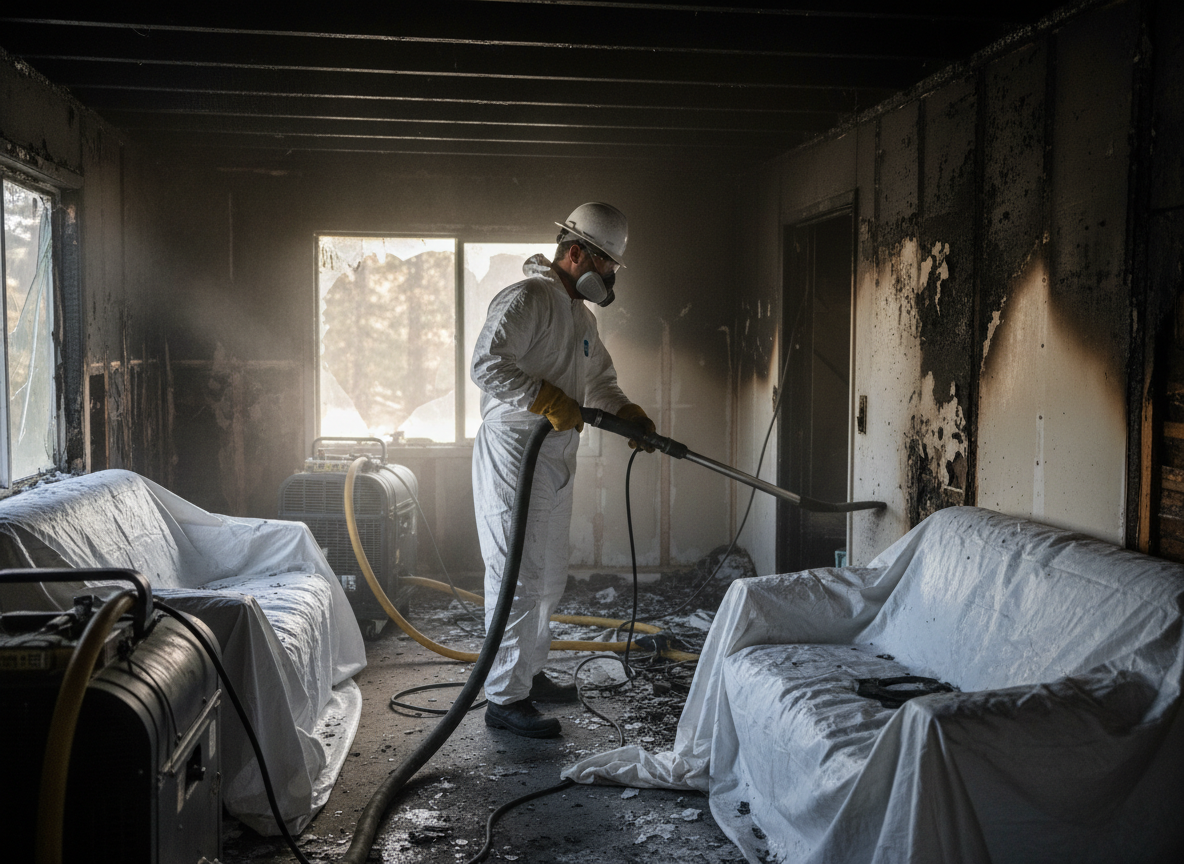
Rimforest homes sit in steep terrain with older wood-frame construction common throughout San Bernardino County. After a fire, soot travels through attics and wall cavities quickly, especially when negative pressure from mountain winds pulls particles deeper into insulation and HVAC lines. Winter snowfall often delays exterior access from Lake Arrowhead roads, forcing crews to prioritize interior containment first so secondary water damage from melted snow does not compound the loss.
Emergency response starts with shutting down HVAC systems to stop smoke circulation, then establishing negative air zones using portable equipment suited to narrow driveways and limited parking typical in Rimforest. Crews document every layer of affected drywall and subfloor because older homes frequently contain multiple renovation layers that hide hidden char. Tarps and dehumidifiers must be staged immediately when forecasts call for heavy snow, since trapped moisture turns soot into corrosive acid that etches metal fixtures and wiring.
Cleanup protocols differ from flatland jobs because Rimforest soil stays saturated longer after snowmelt, limiting where heavy equipment can be staged without creating runoff issues. Technicians test for pH levels on every surface before sealing, knowing that alkaline soot left untreated will re-emit odors once heat returns in spring. Final clearance includes blower-door testing to confirm the home no longer pulls outside air through any remaining gaps created during the fire.
Winter Access Realities
Snow accumulation on Pine Ave and surrounding ridges can close routes for days, so crews keep four-wheel-drive response vehicles and extra containment supplies staged at the 26491 Pine Ave location for immediate deployment regardless of weather.
Technician insight
In Rimforest, the thing that catches most people out with Emergency fire damage restoration is how fast smoke moves through the narrow wall cavities of older cabins when heavy winter snowfall blocks the usual Lake Arrowhead access routes and traps moisture inside the structure.
Attic Fire Smoke in Rimforest Cabin
Homeowner reported smoke odor after an electrical fire in the attic during a snowstorm. Inspection showed soot had traveled through HVAC runs into living spaces because of the home's multi-layer insulation. Crews sealed the system, performed negative-air cleaning, and dried affected cavities before snowmelt could add moisture. Air quality tested clear and the family moved back in without odor return.
How it works
- 1
Immediate Site Securing
Technicians arrive within hours, board openings, and set up negative air to prevent further smoke migration into unaffected rooms.
- 2
Detailed Assessment
Every room is inspected for hidden char paths through attics, chases, and HVAC runs common in Rimforest construction.
- 3
Soot and Residue Removal
Specialized equipment cleans surfaces, ducts, and insulation while monitoring for acid formation caused by moisture.
- 4
Drying and Odor Control
Air movers and HEPA filtration run until moisture levels match unaffected areas, followed by odor-neutralizing treatments.
- 5
Final Clearance
Independent testing confirms air quality before any reconstruction begins.
Pricing
Upfront quotes after on-site inspection; final cost depends on smoke travel depth and any winter access delays.