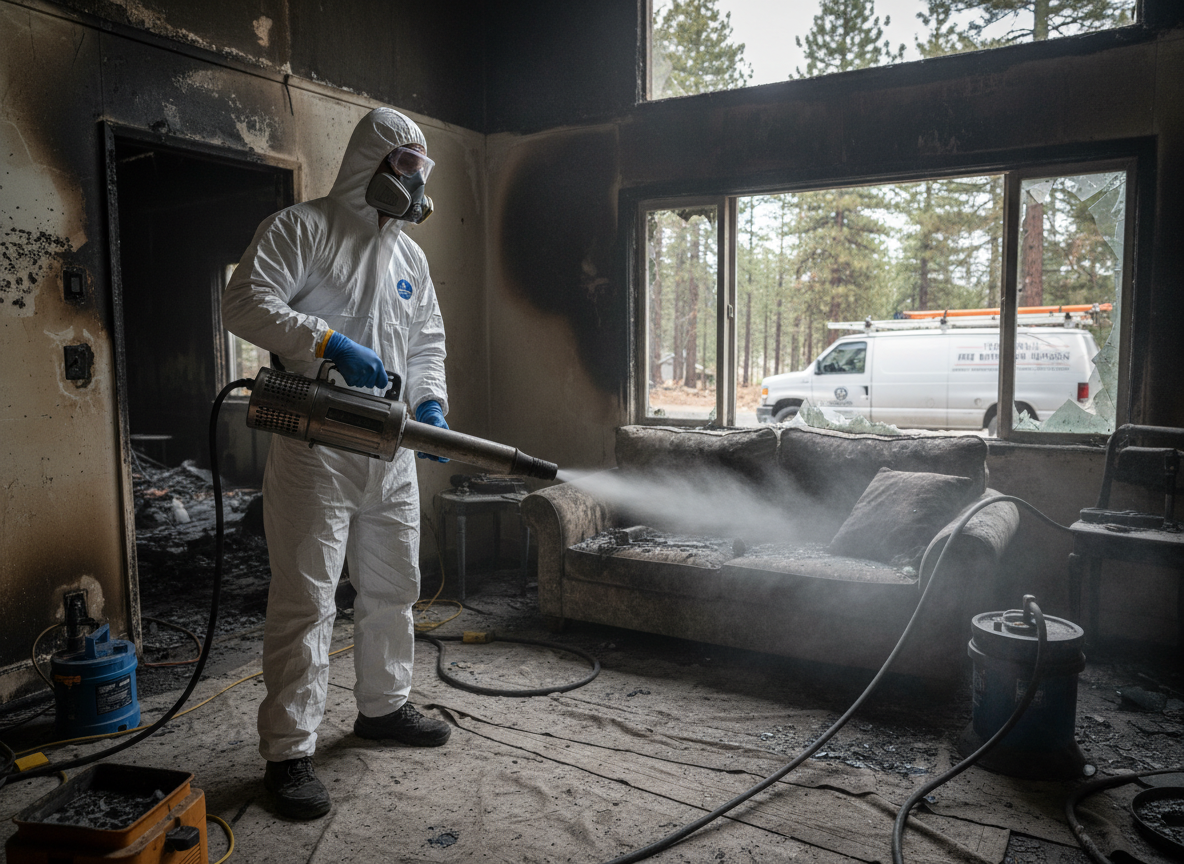
Rimforest homes built decades ago often feature exposed pine beams and minimal insulation that readily absorb smoke from even small kitchen or fireplace incidents. Once winter snowfall blankets roofs, natural ventilation drops sharply and odors linger in attics and wall cavities for weeks. Effective removal requires hydroxyl generators and thermal fogging rather than simple ozone machines, because the dense mountain air and cold temperatures slow chemical breakdown of soot residues.
Technicians working along Pine Ave and the Lake Arrowhead corridor routinely find that smoke migrates through unsealed chases around plumbing and electrical runs common in 1960s-1980s cabins. Standard carpet and drywall cleaning fails here; instead, porous materials must be treated in place or removed when saturation exceeds safe thresholds. Snow accumulation also delays equipment transport up the hill, so crews stage gear at the 26491 Pine Ave base to maintain 24/7 response.
San Bernardino County building practices in the area emphasize fire-resistant roofing, yet interior finishes remain vulnerable. After odor treatment, crews verify clearance with both sensory inspection and air sampling to confirm no re-entrainment occurs when furnaces restart after long winter shutdowns.
Technician insight
In Rimforest, the thing that catches most people out with Odor removal after fire is how heavy winter snowfall seals roofs and traps smoke deeper into the pine framing and older insulation found along Pine Ave and toward Lake Arrowhead.
Persistent Smoke Odor After Chimney Fire
A Rimforest cabin near the Lake Arrowhead border retained a strong smoke smell weeks after a contained chimney incident. Inspection showed particles lodged in attic insulation and wall cavities sealed by snow-covered vents. Hydroxyl treatment and targeted fogging over three days cleared the odor; the home passed clearance testing before the next storm arrived.
How it works
- 1
Site Assessment
Inspect all affected rooms, attics, and crawl spaces to map smoke migration paths created by Rimforest's older framing and limited airflow during snow season.
- 2
Containment Setup
Isolate treated zones with plastic barriers and negative air to prevent odor redistribution through shared walls typical in clustered mountain neighborhoods.
- 3
Neutralization Application
Deploy hydroxyl generators, thermal foggers, and absorbent media to break down embedded smoke compounds in wood and insulation.
- 4
Clearance Testing
Perform final sensory and air-quality checks once equipment is removed, ensuring odors do not return when homes are sealed for winter.
Pricing
Pricing varies with smoke penetration depth, square footage, and seasonal access challenges; an on-site assessment provides the accurate scope.