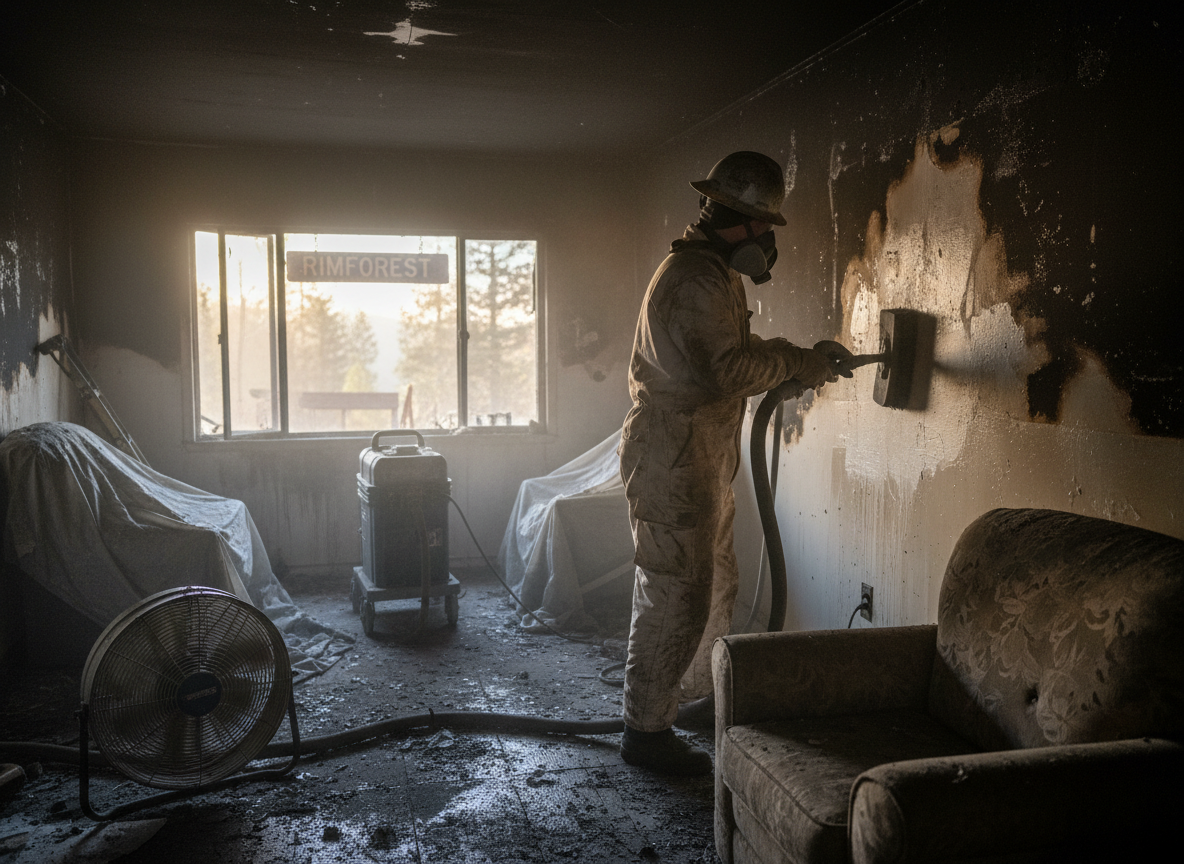
Rimforest sits at elevation in the San Bernardino Mountains where winter snow loads and steep terrain change how smoke travels and settles. Older cabins and homes built before modern fire codes often have balloon framing and unsealed attics that let smoke penetrate deep into wall cavities and insulation. After a fire, crews must account for snow blocking access roads and cold temperatures that slow drying of affected materials.
Smoke residue in these conditions bonds differently to wood and drywall because of the dry mountain air and occasional high winds that push soot farther than in lower elevations. Technicians test surfaces with pH strips and use specific cleaners matched to the fuel type burned, whether pine, structure contents, or synthetic materials common in Lake Arrowhead vacation homes. Failure to remove acidic smoke can cause hidden corrosion on wiring and HVAC components weeks later.
Restoration follows a sequence that starts with securing the structure against snow and rain while documenting every affected room. Containment barriers prevent cross-contamination into unaffected areas, then HEPA air scrubbers and negative air machines run continuously. Final clearance includes visual inspection plus odor checks in closed rooms, because mountain humidity swings can re-release trapped odors if cleaning is incomplete.
Seasonal Considerations
Winter fires followed by heavy snowfall require tarping roofs immediately and monitoring for ice dams that trap moisture against charred wood. Summer fires bring different challenges with low humidity accelerating soot adhesion to exterior siding.
Technician insight
In Rimforest, the thing that catches most people out with fire and smoke damage restoration is how quickly smoke travels through the open attic spaces common in older mountain cabins once winter winds pick up. Homeowners often focus on visible char and miss the fine soot that has already settled inside wall cavities and under snow-covered roofs.
Rimforest Cabin After Structure Fire
A kitchen fire in a Rimforest home sent smoke through the balloon-framed walls and into the attic during a cold snap. Crews found heavy soot on insulation and rafters hidden under fresh snow. They contained the space, removed contaminated materials, ran continuous filtration, and restored the home before the next storm arrived.
How it works
- 1
Initial Assessment
Technicians arrive within hours, document damage room by room, and test surfaces for smoke penetration while noting snow or terrain obstacles around the Rimforest property.
- 2
Containment and Safety
Plastic barriers and negative air machines isolate the affected area, protect HVAC systems, and secure the structure against weather before any cleaning begins.
- 3
Cleaning and Odor Removal
Specialized equipment removes soot from surfaces, contents are inventoried and cleaned off-site when needed, and air scrubbers run until readings meet clearance standards.
- 4
Restoration and Final Walkthrough
Repairs restore the home to pre-loss condition, followed by a walkthrough with the homeowner to confirm all smoke-affected areas have been addressed.
Pricing
Upfront quotes provided after inspection; scope and cost depend on square footage affected, smoke migration into cavities, and any structural repairs needed.