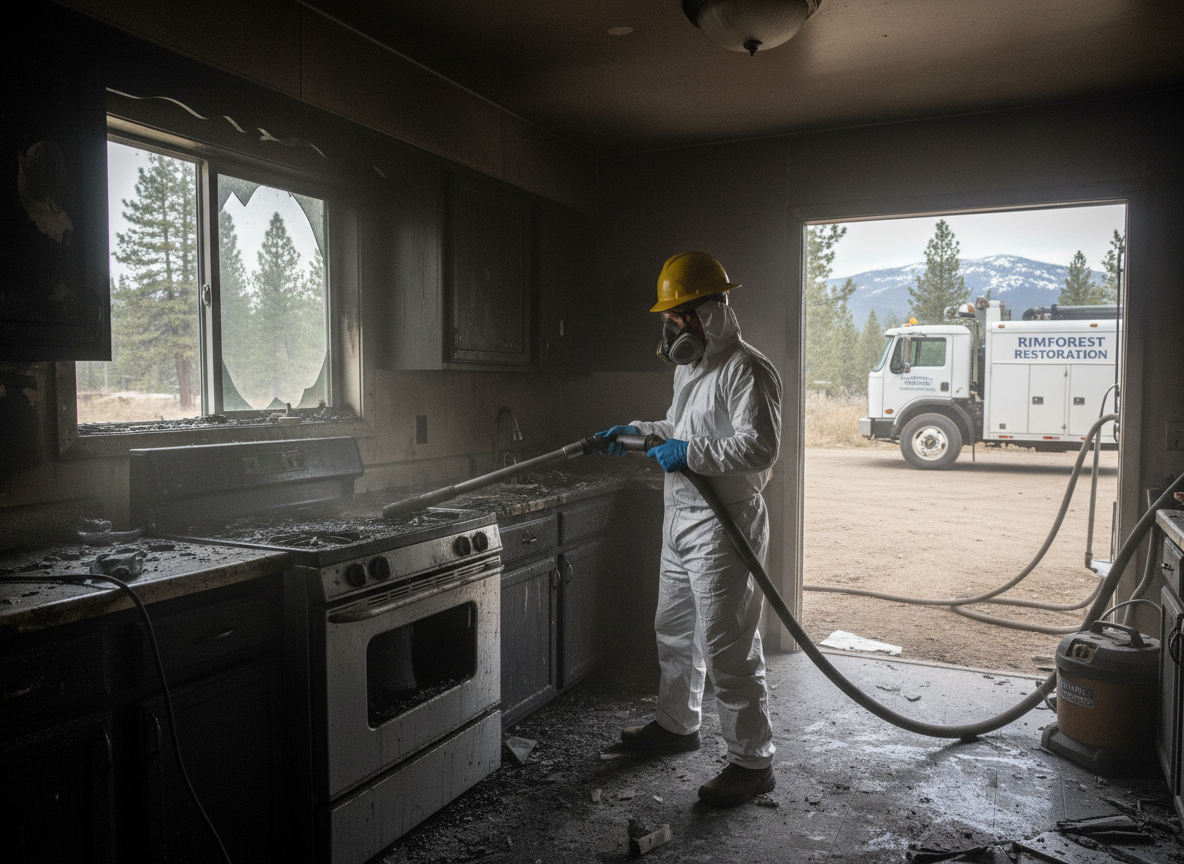
Kitchen fires in Rimforest often start from grease or unattended cooking on older wood-framed homes common in the San Bernardino County mountains. These structures, many built decades ago near Lake Arrowhead, have tight cabinets and limited ventilation that let heavy soot travel through HVAC systems and settle into insulation. Winter snowfall adds another layer because sealed windows trap particulates, making odors harder to remove without proper negative air machines and HEPA filtration.
Technicians must address both visible char and invisible smoke residue on surfaces like tile, stainless steel, and wood. In mountain conditions, cold temperatures slow drying after any water used for suppression, increasing the risk of secondary mold if moisture is not extracted quickly. Edge cases include fires that reach behind appliances or into crawl spaces typical of Rimforest cabins, requiring disassembly and odor neutralization with specialized agents rather than standard cleaners.
Code considerations in San Bernardino County may require permits for any electrical or plumbing work uncovered during cleanup, especially when older wiring is exposed. Homeowners should avoid DIY attempts because improper handling of corrosive soot can etch metal fixtures and permanently stain porous materials like grout or unsealed wood common in local kitchens.
After initial containment, crews test air quality and use thermal fogging to reach smoke embedded in wall cavities, a step that becomes critical when heavy snow prevents opening windows for natural airing. Final verification includes checking for lingering odors that can return once heat is turned on during cold months.
Technician insight
In Rimforest, the thing that catches most people out with Kitchen fire cleanup is how winter snowfall keeps windows shut for weeks, letting smoke sink deep into the insulation and subfloor of older cabins near Lake Arrowhead before anyone notices the full extent.
Grease Fire In Rimforest Cabin
A kitchen grease fire spread soot through the HVAC of a 1970s wood home off Pine Ave. We found heavy residue behind cabinets and in ductwork that had been sealed by cold weather. Negative air and targeted cleaning removed the embedded smoke, restoring the space without odor return once heating resumed.
How it works
- 1
Initial Assessment And Safety
Inspect the kitchen for structural integrity, electrical hazards, and extent of soot migration while documenting damage for insurance.
- 2
Containment And Ventilation Setup
Isolate the affected area with plastic barriers and set up negative air machines to prevent soot spread throughout the Rimforest home.
- 3
Soot And Residue Removal
Clean all surfaces using appropriate agents for grease-based smoke, including cabinets, appliances, and HVAC components.
- 4
Odor Neutralization And Drying
Apply thermal fogging and dehumidification to eliminate embedded smells, accounting for cold mountain temperatures that slow evaporation.
- 5
Final Inspection And Restoration
Test air quality, reinstall cleaned items, and coordinate any needed repairs with local permits if wiring or plumbing was affected.
Pricing
Pricing varies with the size of the kitchen, depth of smoke penetration, and any added challenges from winter access or older home construction.