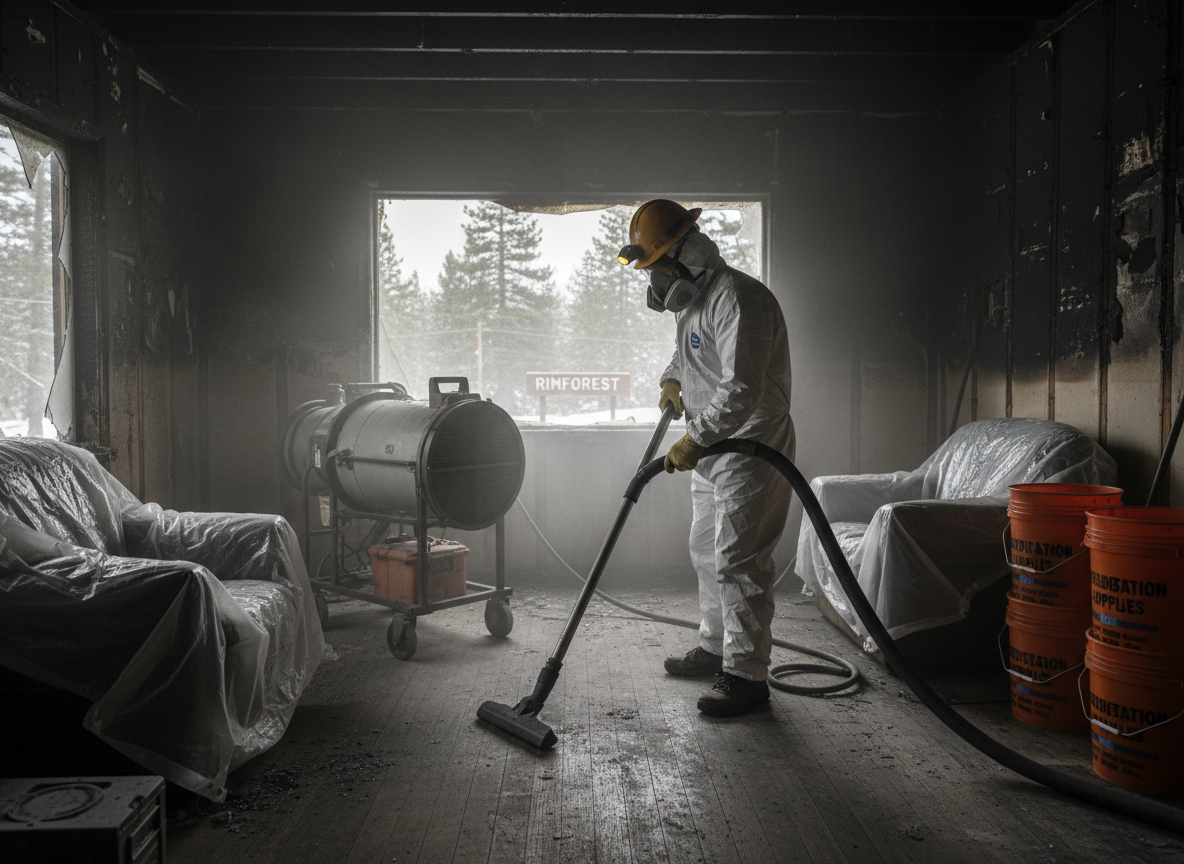
Smoke from structure fires in Rimforest often penetrates the tight, older log and frame homes common in the area, especially when heavy winter snowfall seals attics and crawlspaces. Soot bonds to porous materials like insulation, cedar paneling, and drywall, requiring removal rather than simple cleaning. We test surfaces for pH levels because alkaline smoke residues from burning synthetics can damage finishes if left untreated during the cold months when windows stay closed.
In San Bernardino County mountain properties, smoke travels through shared walls and HVAC systems in neighborhoods around Rimforest and Lake Arrowhead. We isolate zones with negative air machines before extraction to prevent cross-contamination. Winter conditions slow natural drying, so we use low-grain dehumidifiers sized for the high moisture loads that follow snowmelt, avoiding secondary mold growth in already compromised cavities.
Edge cases include smoke trapped in stone fireplaces and chimney chases that run through multiple stories. These require camera inspection and targeted soda blasting because standard wiping leaves residue that reactivates odors when heating systems cycle on. We also address contents separately, bagging textiles and electronics before moving them to controlled drying rooms to prevent further off-gassing inside the home.
Technician insight
In Rimforest, the thing that catches most people out with smoke remediation is how winter snowpack keeps attics cold and sealed, locking odors into the cellulose insulation of 1960s-era cabins long after the fire is out. Homeowners often try airing out once the weather warms, but that just moves the smell back into living spaces when the furnace kicks on.
Attic Smoke in a Rimforest Cabin
Heavy smoke from a kitchen fire traveled upward through an open chase in a 1970s cabin. We found soot embedded in the attic insulation and along roof sheathing where snow had kept temperatures low. After containment and HEPA extraction, we removed the insulation, treated the framing, and restored airflow so the odor did not return when the first cold snap hit.
How it works
- 1
Initial Assessment
We inspect all affected rooms, attics, and HVAC runs with moisture meters and borescopes to map smoke migration paths through the structure.
- 2
Containment Setup
Plastic barriers and negative air pressure isolate work zones so particles do not spread into unaffected living spaces during removal.
- 3
Soot Removal
HEPA vacuuming followed by pH-neutral cleaning agents lifts residues from walls, ceilings, and contents without driving particles deeper into materials.
- 4
Odor Neutralization
Thermal fogging and ozone treatments reach hidden cavities, then we ventilate with outside air once levels drop below detectable thresholds.
- 5
Final Clearance
We retest surfaces and air quality, then document the work for insurance before returning the property to normal use.
Pricing
Cost depends on square footage affected, depth of smoke penetration into insulation and attics, and whether contents require separate handling; we provide upfront written estimates after inspection.