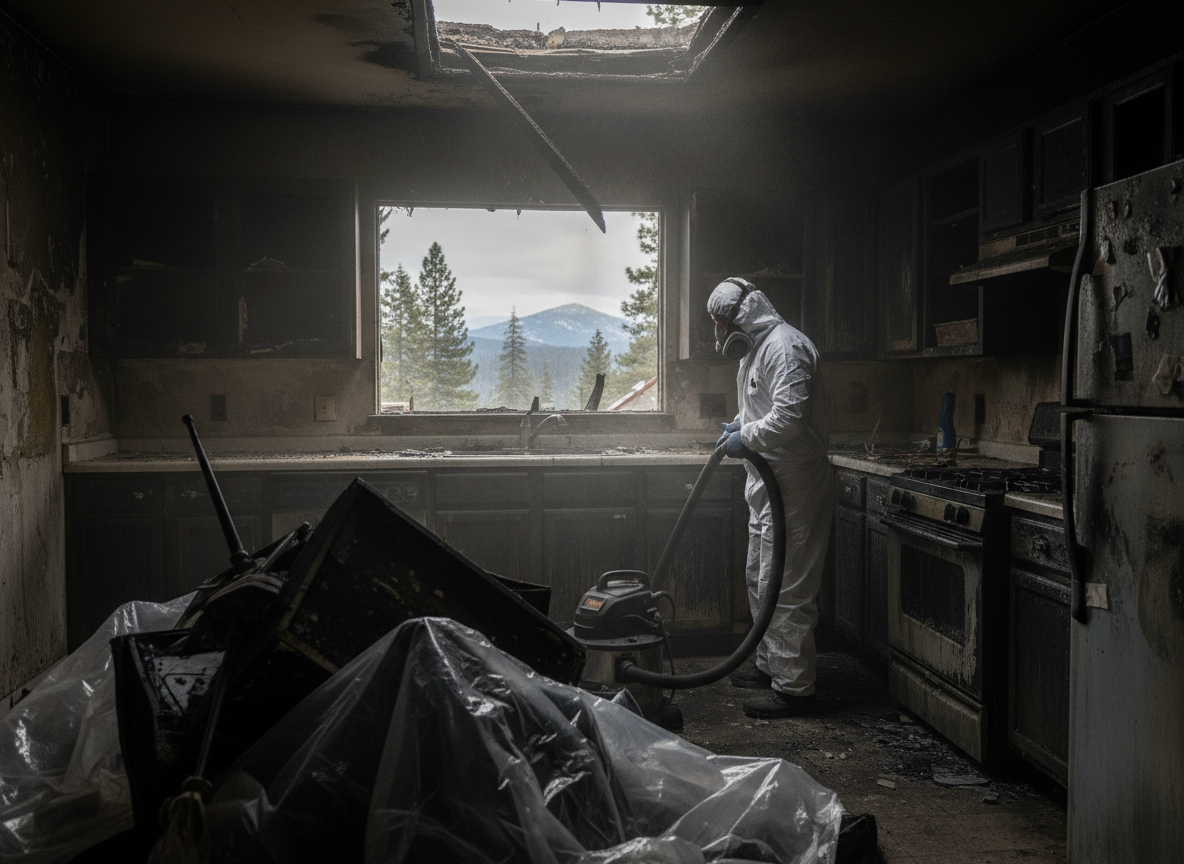
Rimforest sits at elevation in the San Bernardino National Forest with heavy winter snowfall that often blankets access roads and slows drying after a fire. Older wood-frame cabins common here absorb smoke deeply into walls, floors, and insulation, especially when tenants have used wood stoves or left belongings packed in closets. Cleanup requires removing charred materials without disturbing load-bearing beams that may have hidden charring from past fires common in the area.
Smoke from structure fires travels upward through attics and settles in snow-melt moisture that seeps through older roofs, creating secondary mold risks once temperatures drop below freezing. Technicians must test porous materials like drywall and carpet padding for odor retention before deciding on removal versus cleaning, because Lake Arrowhead humidity patterns can trap smells for weeks after initial ventilation.
Tenant belongings require separate inventory and off-site cleaning because many Rimforest rentals lack space for on-site ozone or hydroxyl treatment. Contents like clothing and electronics often need multiple cycles due to soot from synthetic furnishings that melt and re-adhere during temperature swings between day and night in the mountains.
Technician insight
In Rimforest, the thing that catches most people out with tenant fire damage cleanup is how heavy winter snowfall keeps moisture trapped inside these 1950s-1970s cabins long after the fire is out, forcing extra drying days before walls can be sealed.
Smoke in a Rimforest Rental After Electrical Fire
A tenant-reported electrical fire in a Pine Ave cabin spread soot through the attic during a snowstorm. We found hidden charring along rafters and water trapped under floorboards from melted snow mixing with suppression water. Contents were moved to a heated facility for cleaning while we removed saturated insulation. The unit passed clearance testing two weeks later once drying completed.
How it works
- 1
Initial Assessment
Walk through the unit documenting smoke paths, water used by firefighters, and any snow-related access issues at the Pine Ave property.
- 2
Containment and Safety
Set up negative air machines and seal affected rooms to prevent soot spread into unaffected tenant spaces while monitoring for structural weakening from mountain freeze-thaw cycles.
- 3
Soot and Residue Removal
Clean hard surfaces with specialized agents, remove porous materials that hold odor, and treat contents for relocation.
- 4
Drying and Final Clearance
Use dehumidifiers adjusted for winter conditions, then verify air quality before tenants return.
Pricing
Pricing varies by square footage affected, depth of smoke penetration into older cabin materials, and whether winter access delays drying.